Every year, school districts are asked to do more with less: keep students safe, keep communication clear, and keep budgets in check, often all at once. The School Violence Prevention Program (SVPP) exists to close that gap. The SVPP grant is one of the largest federal grant opportunities available specifically for K-12 school safety, funding school security and student safety initiatives.
This guide breaks down what the SVPP covers, who's eligible to apply, and what your district can do today to prepare a strong submission, including where technology like emergency alert systems fits into an SVPP-funded safety plan.
What Is the School Violence Prevention Program?
The SVPP is a competitive federal grant administered by the Department of Justice's Office of Community Oriented Policing Services (COPS Office). It was created under the STOP School Violence Act of 2018. The act gave the COPS Office authority to fund security improvements at K-12 schools through evidence-based safety programs and technology.
In plain terms: SVPP is federal money set aside to help districts pay for the physical and technological security upgrades that make schools safer.
For FY2026, the program has:
-
$73 million in total available funding
-
A maximum award of $500,000 per applicant, over a 36-month period
-
A required local cash match of at least 25% (waived for microgrant recipients)
-
About 200 anticipated awards
-
$1 million reserved for microgrants of up to $100,000, prioritized for rural, tribal, and low-resourced districts
Key FY2026 Dates
SVPP applications are submitted in two separate steps, each with its own deadline. Missing either one disqualifies the application, so it's worth putting both on your district's calendar now.
-
Application window opened: June 9, 2026
-
Step 1 - Grants.gov deadline: August 4, 2026, 4:59 PM ET
-
Step 2 - JustGrants full application deadline: August 11, 2026, 4:59 PM ET
-
Award notifications: On or after October 1, 2026
-
Funding period begins: October 1, 2026, for up to 36 months (with the option for a no-cost extension)
The COPS Office is also hosting a notice of funding opportunity webinar for potential applicants, a useful first stop if your team is new to the process.
What Is Covered (and Isn’t Covered) by the School Violence Prevention Program?
SVPP is a competitive award program that funds security improvements at K-12 schools and on school grounds through evidence-based safety programs and technology. It's part of the COPS Office's broader mission to strengthen community safety and protect the public from crime.
This school safety grant can be used across several purpose areas:
-
Coordination with local law enforcement
-
Training for local law enforcement officers to help prevent student violence against others and against themselves
-
Metal detectors, locks, improved lighting, and other deterrent measures
-
Technology that allows for the expedited notification of local law enforcement during an emergency
-
Other measures the COPS Office determines significantly improve school security
In practice, SVPP funds what the COPS Office calls "evidence-based" programs and technology. These are solutions that meet the criteria laid out in the SVPP Notice of Funding Opportunity and demonstrate a meaningful effect on school safety outcomes.
That last purpose area, technology for expedited emergency notification, is where most districts' communication and alerting investments fall. It's covered in more detail below.
Keep in mind that SVPP funding doesn’t cover all school safety expenses. There are a handful of specific exclusions you should know about. For starters, tactical gear like firearms, ammunition, and body armor are out. And so is tech like body cams, facial recognition, or license plate readers. You also won't be able to use the funds for things like CAD systems, vape detection equipment, vehicles, or paying ongoing security guard and officer salaries.
Is My District Eligible for the School Violence Prevention Program?
It doesn't matter which state your district operates in. Every state is eligible to apply for FY2026 SVPP funding. Eligible applicant types include:
-
School districts (including public charter schools and single-school districts)
-
School boards
-
Law enforcement agencies
A few exceptions are worth flagging. Consortia cannot apply. Individual schools that don't operate as a standalone district, along with private and independent schools, can't apply as the primary applicant either. They can still benefit from SVPP funding as a sub-recipient under an eligible applicant's award.
SVPP isn't awarded by formula. Applications are reviewed competitively based on:
-
Demonstrated security need
-
The strength of the proposed project
-
Need for federal assistance
If your district received SVPP funding in a previous cycle, you're still welcome to apply again this year for a different project.
SVPP and Alyssa's Law: How the Two Connect
If your district is in a state where Alyssa's Law applies, it's worth understanding how SVPP funding fits in.
Alyssa's Law, named for Alyssa Alhadeff, a victim of the 2018 Parkland shooting, is a state-level mandate, not a federal one. It requires K-12 schools to install silent panic alarms wired directly to law enforcement so help arrives faster during an emergency. It has passed in a growing number of states, including New Jersey, Florida, New York, Texas, Tennessee, Utah, Oklahoma, Georgia, Washington, Oregon, Virginia, and West Virginia.
SVPP doesn't reference Alyssa's Law, but the connection is direct in practice. Panic and immediate alarm notification systems are listed among SVPP's example solutions under the purpose area for expedited law enforcement notification, which makes SVPP a common funding source for districts working to meet Alyssa's Law requirements.
If your state also has its own dedicated Alyssa's Law grant program, it's often worth layering that funding with SVPP rather than relying on one or the other.
The SVPP and Rise Vision: Which Solutions to Consider
Just like the School Violence Prevention Program, Rise Vision's focus is helping schools communicate and keep students and staff safer.
SVPP funding can support a wide range of approved technologies, but for districts evaluating where digital communication and emergency notification tools fit into their security plan, here's where Rise Vision lines up.
Rise Vision Emergency Alerts: Get Critical Information to Every Display, Instantly
When an emergency happens, every second between the incident and the alert reaching classrooms and law enforcement matters.
Many districts still rely on manual notification, like a phone call, an intercom announcement, or a staff member moving between buildings. That can mean dangerous delays exactly when speed matters most.
Rise Vision's emergency alerts push instant, high-contrast visual notifications directly to the displays already in your classrooms, hallways, and offices. The solution integrates with the Common Alerting Protocol (CAP) systems many districts already use, including:
-
Raptor
-
CrisisGo
-
Singlewire
-
Alertus
-
InformaCast
Because it runs on screens your school or district already owns, it's typically a lower lift to deploy than introducing new standalone hardware.
One budgeting detail worth knowing: approved SVPP costs can include software and prepaid warranties or maintenance agreements for up to 36 months, so a multi-year emergency alerts subscription is generally fundable, not just a one-time hardware purchase.
Rise Vision Digital Signage: Reinforce Online Safety and Digital Citizenship
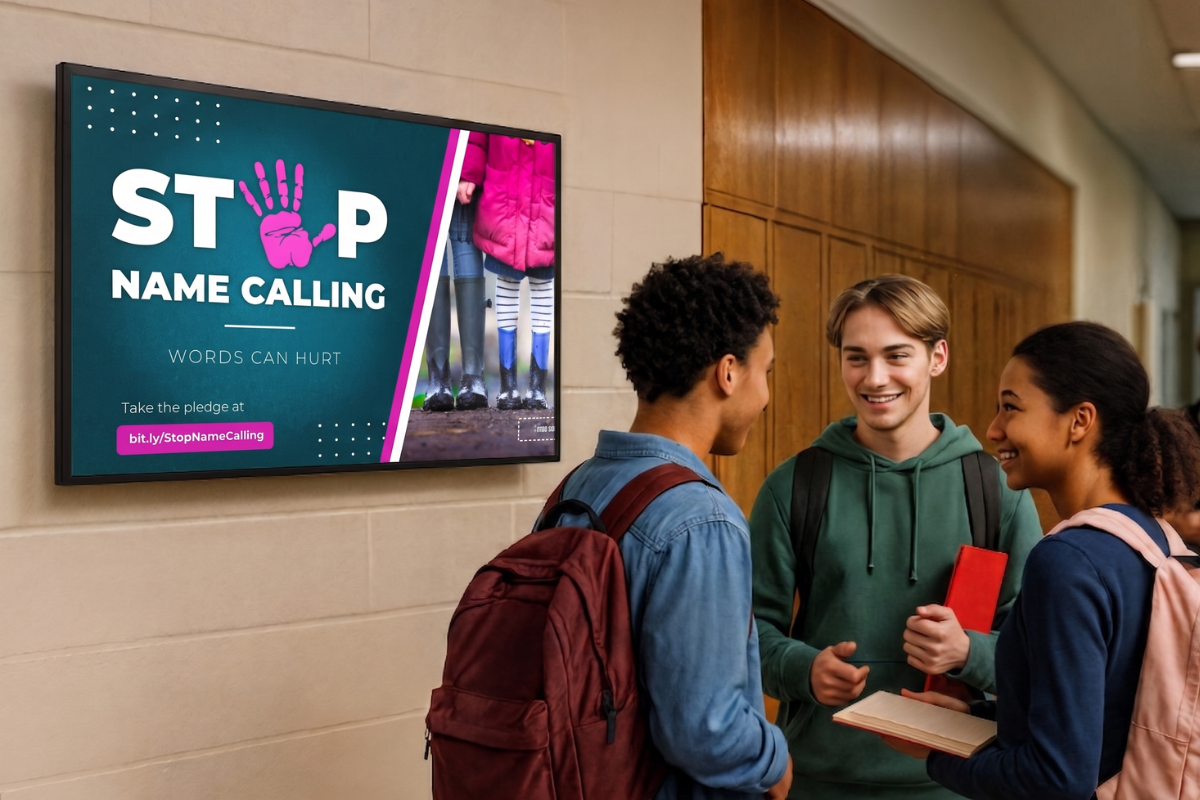
Online risks like cyberbullying, inappropriate content, and digital privacy issues don't stop at the schoolhouse door. Most districts already run digital citizenship curriculum to address them. The challenge is keeping that messaging visible and consistent, not just something covered once in a classroom lesson and then forgotten.
Rise Vision's digital signage turns the displays your district already has into a steady channel for reinforcement, including a built-in integration with Common Sense Media for trusted digital literacy content. Many districts rotate the same screens used for daily announcements and emergency alerts to also share:
-
Internet safety tips
-
Digital citizenship reminders
-
Anonymous reporting line information
Digital signage for general communication isn't typically what the SVPP grant itself covers. But it's a low-cost way to extend the value of the displays and notification system your district may already be funding through the grant.
How Can My School or District Apply for The SVPP School Safety Grant?
SVPP applications move through two separate federal systems:
-
Step 1: Grants.gov. Submit your SF-424 (Application for Federal Assistance) by August 4, 2026. This requires an active System for Award Management (SAM) registration and an up-to-date electronic business point of contact.
-
Step 2: JustGrants. Complete the full application, including budget narrative and required attachments, by August 11, 2026.
Note: Your district must have an active SAM.gov registration and Unique Entity Identifier before it can submit the first part of the SVPP application through Grants.gov. Registration or renewal can take several weeks, so the COPS Office recommends starting the process at least 30 days before the Grants.gov deadline. If your district’s registration has expired or has never been completed, begin the process as early as possible rather than waiting until the application deadline approaches.
Full instructions, FAQs, and webinar registration are available on the COPS Office's How to Apply page.
5 Steps to Prepare Your District's Application
Competitive SVPP applications are built on documented evidence, not anecdotes. Districts that start preparing well before the August deadlines tend to submit stronger applications. Here's a practical sequence:
1. Conduct a comprehensive security assessment
Use a recognized framework, such as the PASS K-12 Safety and Security Guidelines or the CISA K-12 School Security Guide, to evaluate:
-
Hard security: Access control, surveillance, perimeter
-
Soft security: Visitor management, communication systems, emergency procedures
-
Cybersecurity
Third-party or state-certified assessors can add credibility to your findings.
2. Coordinate with local law enforcement and other stakeholders
Federal grants like SVPP expect documented proof of collaboration. Form a school safety committee with district leadership, principals, local police and fire, and relevant staff. Formalize partnerships through Memorandums of Understanding.
3. Update and board-approve your Comprehensive School Safety Plan
Your CSSP should be current, aligned with state requirements, and formally adopted, with version control showing when it was last revised.
4. Collect objective data to demonstrate need
Pull objective data, including:
-
3-5 years of incident and disciplinary data
-
Demographic and community risk indicators
-
An inventory of your current security technology
This helps you clearly identify gaps. Avoid anecdotal claims; reviewers score documented need.
5. Assemble your application package early
The application package typically includes:
-
A board resolution (if required)
-
Your security assessment summary
-
Current safety plan
-
An itemized budget with vendor quotes
-
An implementation timeline
-
A sustainability plan showing how improvements will be maintained after the grant period ends
Rise Vision Is Here to Help
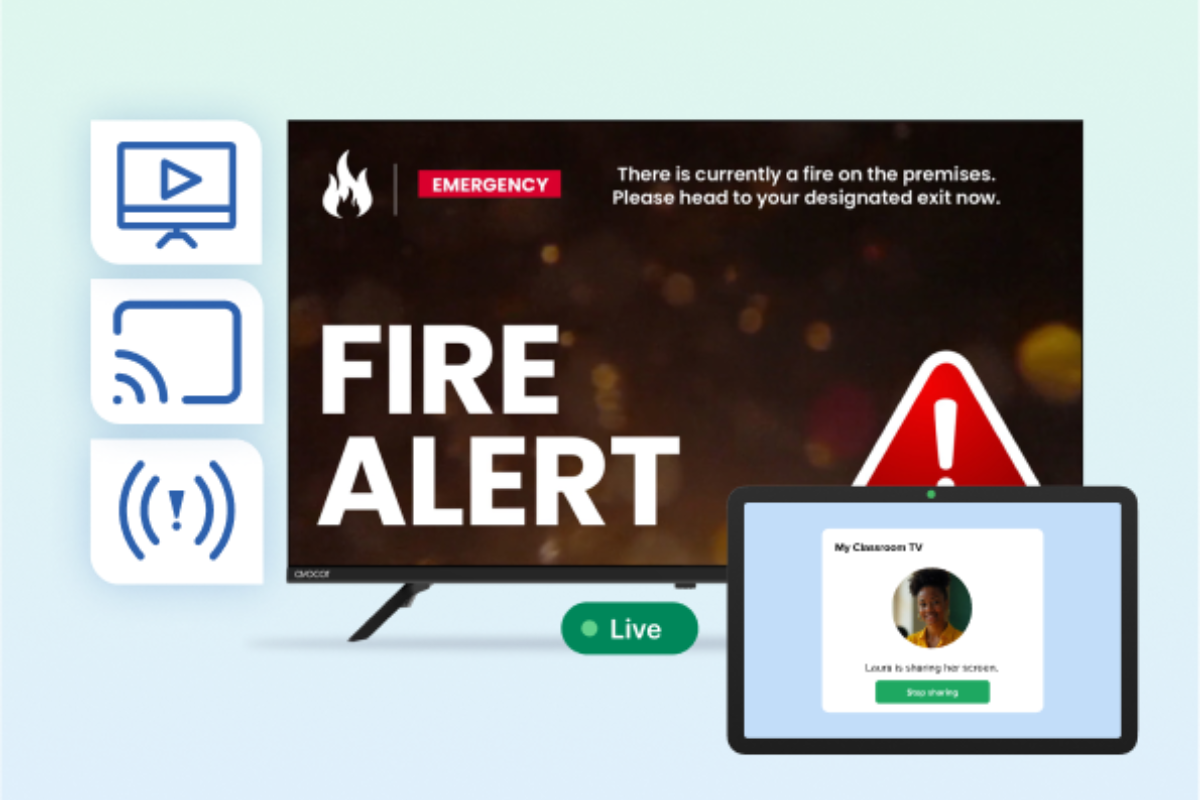
Many schools still lack a streamlined, reliable way to send critical alerts across every building during an emergency. Without fast, clear communication, that gap can mean confusion and delayed response exactly when speed matters most.
Safety is something we take seriously at Rise Vision. That's why we built emergency alerts to integrate with leading systems via the Common Alerting Protocol. Instant, reliable notifications reach every display the moment they're triggered, giving your district peace of mind when it matters most.
More From Our Blog
-
Interactive Touch Screen Digital Signage: How It Works and What You Need
Interactive touch screen digital signage lets viewers tap a display to find what they need. It pairs a commercial touch display with content software. Common uses include wayfinding, visitor[…]
Read More -
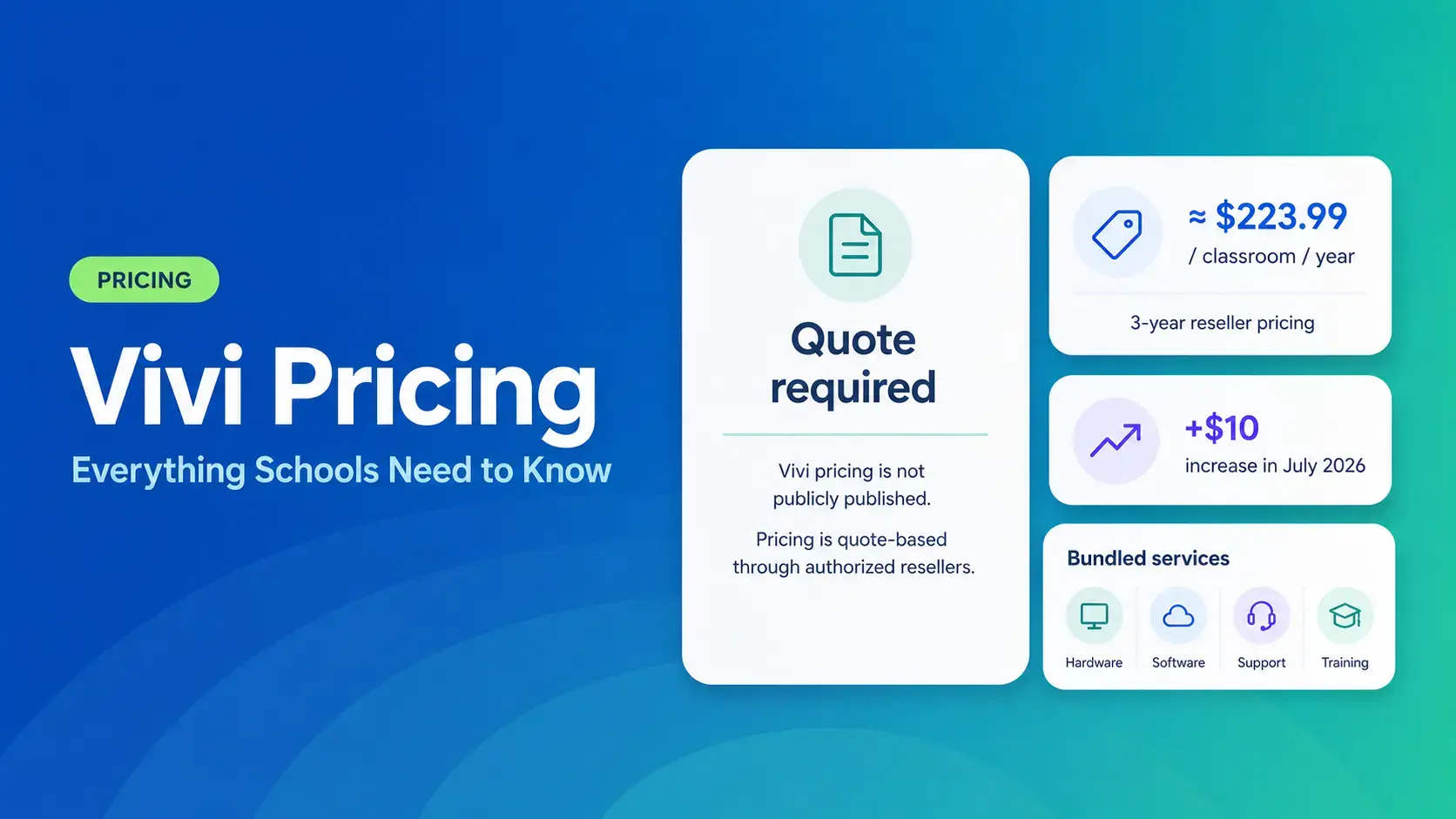
Vivi Pricing 2026: Everything Schools Need to Know Before Getting a Quote
If you're budgeting for Vivi, expect to call sales for a number. Pricing isn't published anywhere. Reseller data puts the 3-year subscription around $224 per classroom per year. That rate rose by $10[…]
Read More -
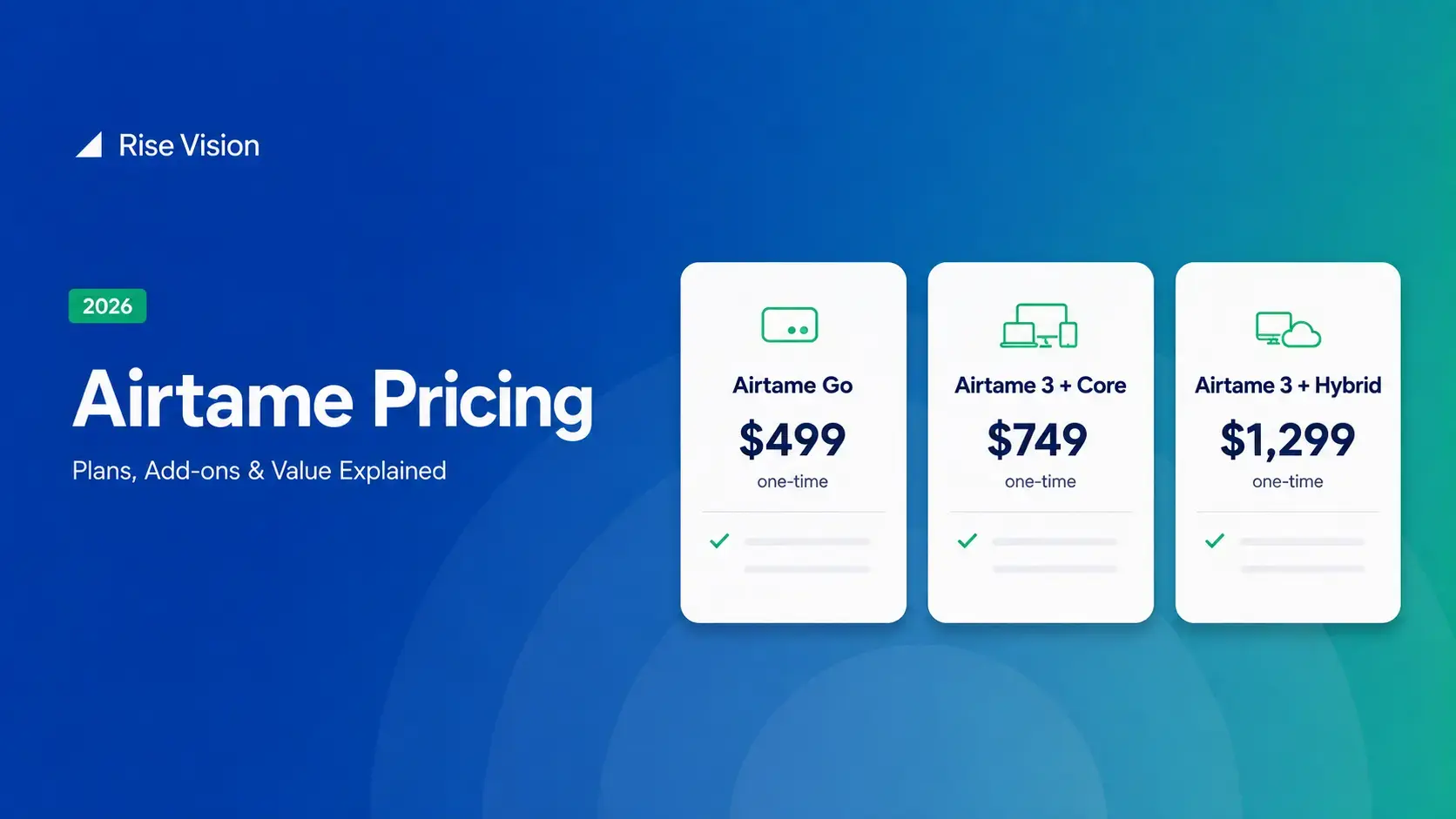
Airtame Pricing 2026: Plans, Costs & Renewal Fees
Airtame's 3-year bundles run $299 to $1,299 per display, then $120–$300/device/year to renew. Signage and alerts come standard on every tier, but only screen sharing survives if you skip renewal.[…]
Read More
12,300+ Organizations Trust Rise Vision, You Can Too































Schedule a Free Demo
You deserve the #1 all-in-one platform for digital signage, screen sharing, and emergency alerts.