Digital signage is a powerful tool for businesses that allows you to quickly and easily communicate important messages with customers. However, managing a digital signage system can be complex and time-consuming if not done properly.
Across a variety of locations, from bustling restaurants and retail stores to modern schools and corporate offices, digital signage solutions enable organizations to manage and update content on screens around the world, ensuring global accessibility and reach.
This article will provide tips and advice on how to effectively manage your digital signage system to improve engagement and communication with your clients.
Introduction to Digital Signage
You know, digital signage is really changing the game when it comes to how businesses talk to their customers, and honestly, it's happening everywhere, bustling restaurants, retail spots, schools, corporate offices, you name it. By using these digital displays, companies can share content that actually moves and catches your eye, keeping people informed and engaged as things happen in real time. Whether you're trying to boost those sales numbers, get important info out there, or just make the whole customer experience feel better, digital signage solutions give you a pretty powerful way to make things happen.
Here's the thing about today's digital signage, it makes managing multiple screens across different spots incredibly easy, so the right message hits the right people at exactly the right moment. With the ability to update content instantly and from anywhere, companies can stay ahead of their competition and respond quickly when things change. Doesn't matter what industry you're in, digital signage is designed to make operations smoother, keep customers engaged, and honestly, bring your whole communications strategy to life in a way that just works.
1. Have a Clear Purpose
Having a clear purpose for digital signage is essential if you want to use it effectively. It helps give you a better understanding of the type of content that would be most beneficial to show, and the best way to reach your audience. Knowing the specific goals of your digital signage can also help streamline the process of creating high-quality graphics and content.
The purpose of digital signage can vary depending on the context and your audience. For example, you might want to use it to showcase promotional materials, highlight company news and events, create a school communication plan, foster a sense of community by sharing ideas and engaging audiences, or serve any number of other purposes.
Having a clear objective in mind will make it easier to manage digital signage content by determining which pieces should be included, and where they should be placed in order to get the most impact.
2. Choose the Right Location
When considering different locations for your digital signage, focus on visibility. The goal should be to select an area that can easily and quickly be seen by people passing by.
This is because the purpose of digital signage is to attract attention and inform viewers about a certain message or product. You will want to place the signs in areas where people are likely to be walking or driving past, such as entrances, lobbies, or busy public areas. For high-traffic environments, digital kiosks are a reliable choice, offering optimal performance and durability for commercial applications.
3. Keep Your Dynamic Content Fresh
It is essential to keep your digital signage content fresh and relevant to the audience in order to make it effective. This means that you need to update the content regularly and tailor it to the needs of the viewers. Regularly refreshed content helps keep viewers, such as students and staff, engaged with the information displayed, ensuring they remain actively involved and interested. This can be done by making sure that the visuals are attractive, as well as including messages that will resonate with them.
Additionally, we recommend using data-driven insights to keep track of what content resonates with your audience so that you can make sure it is always up-to-date.
4. Create Local Content
Creating effective local content for digital signage is key to engaging your audience. Local content can be defined as content that has been created for, and tailored to, a specific location or area. This could include creative visuals such as videos, images, animations, or graphics as well as textual information like news updates, menus, or event schedules.
When planning and creating local content, consider the purpose of the signage:
- Are you looking to entertain or inform?
- Who is your target audience?
- How will they be viewing the content?
- Will they be passing by quickly or stopping to interact with the display?
Answering these questions can help ensure that you create appropriate content for your audience and goals.
5. Use Remote Management
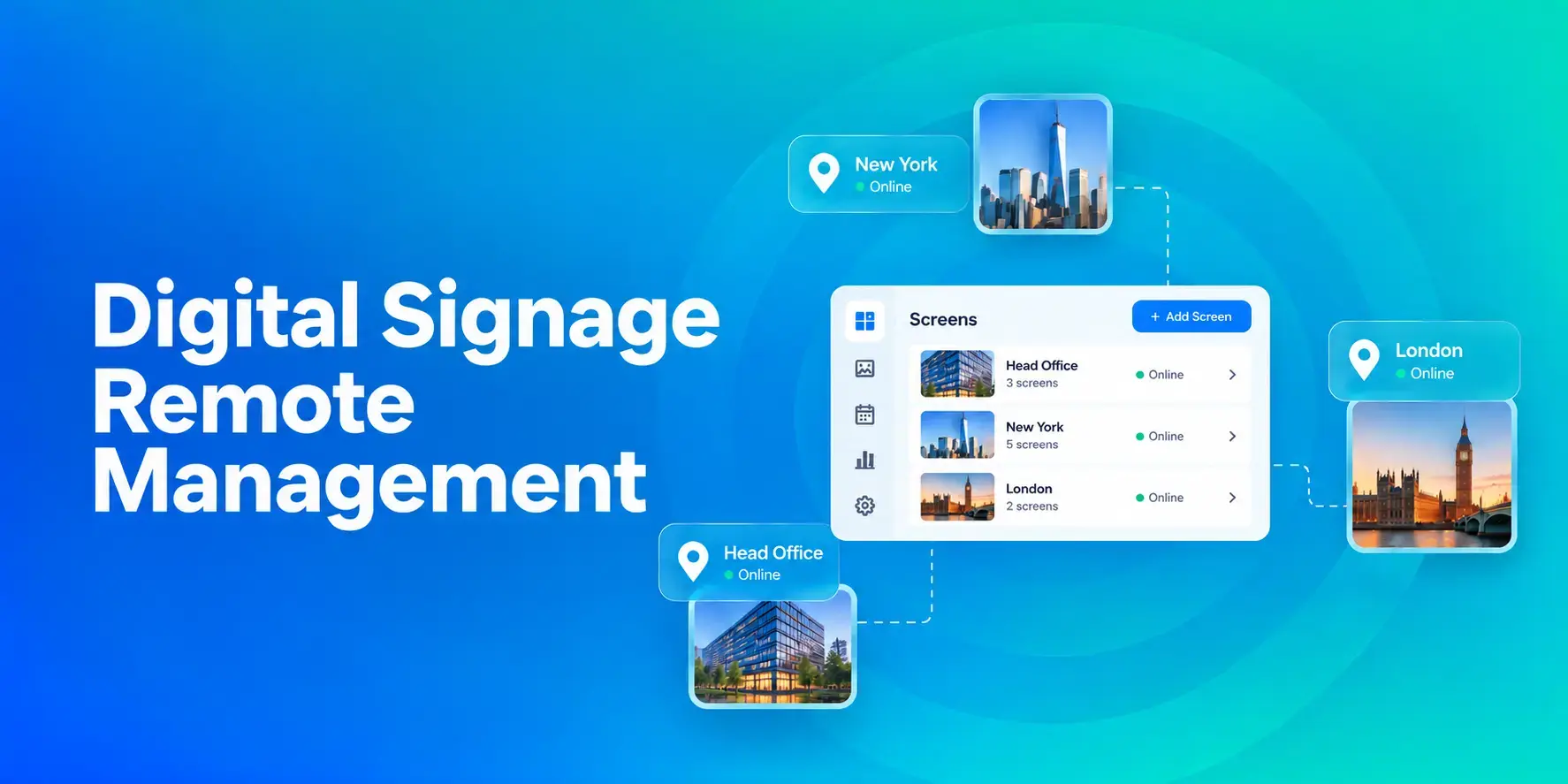
Remote management allows you to easily monitor, configure and troubleshoot your digital signage networks from anywhere with an internet connection. This technology can be used to make sure that displays are always functioning properly and that the content on the screens is up-to-date and relevant.
Remote management often involves installing an app on your device or media player. Users may need to click the install button to complete the install process, enabling remote content management and deployment across different platforms.
One effective way to simplify remote monitoring and content updates is by integrating Manufacturing dashboard software into your digital signage system. This software provides real-time visibility into performance metrics, production goals, and system health, ensuring that your displays reflect accurate and timely information.
With remote management, you can also quickly address any issues that may arise with your digital signage system and reduce the time and labor needed to maintain displays by allowing administrators to access the network from anywhere.
6. Stay Secure
Investing in strong security measures can help prevent costly issues that could arise from a digital signage breach, such as lost customer data or reputational damage. To ensure your digital signage is secure:
- Implement access control systems to restrict who can view, manage, and modify your digital signage.
- Securely store customer data associated with the signage, such as emails or payment information.
- Utilize two-factor authentication to protect access to your accounts.
- Keep software up-to-date by regularly updating all applications used in managing and displaying digital signage.
- Use HTTPS for secure connections to ensure your data is encrypted.
- Monitor and educate users, especially if multiple people have access to the account.
Hardware and Software Requirements
So, you're thinking about getting into digital signage? Honestly, it's not as complicated as it might sound, but you'll need the right mix of hardware and software that actually work well together. On the hardware side, we're talking about digital signage screens, you know, smart TVs, commercial displays, or just regular monitors, along with media players that basically power all your content. What's pretty cool is that most modern setups these days support different operating systems like Android and Windows, so you can pick whatever fits your setup best. It's kind of like choosing between different phones; they all do the job, but some might work better for what you need.
Now, here's where things get interesting on the software side. You'll want a cloud-based content management system, think of it as your control center for designing, scheduling, and managing everything you put on those screens. The best solutions out there are built to be super user-friendly, so you can customize templates, work with your team, and handle multiple displays from just one account. No tech wizardry required, which is honestly refreshing, right? Plus, when these systems play nice with apps like Google Suite, PowerBI, and calendar tools, creating and scheduling content becomes way less of a headache. You can keep your screens fresh with real-time info that actually engages people. And with remote access? You can control your whole network from anywhere, anytime, whether you're at the office or sipping coffee at home.
Choosing a Digital Signage Platform That Makes Management Simple
So here's the reality: all those management tips we just covered? They only work if you've got the right platform backing you up. And honestly, not all digital signage solutions are created equal, some make your life easier, others... not so much.
Rise Vision has been in the digital signage game since 1992, which means they've had plenty of time to figure out what actually matters when you're managing screens day in and day out. Their cloud-based platform was built around one core idea: digital signage shouldn't require a tech degree to operate. And from what we've seen with over 9,000 organizations using it, that promise actually holds up.
What makes Rise Vision particularly useful for busy teams is the template library, we're talking 750+ professionally designed options that get updated every single week, and an AI presentation design and editing tool. So that whole "keep your content fresh" thing we mentioned earlier? It becomes way less of a headache when you're not starting from scratch every time. Gary Lambert, an IT Administrator at a K-12 District, puts it pretty well: "Rise Vision exceeded my expectations. The templates are professional, the centralized management saves time, and the support is outstanding." You can customize these templates to match your brand, schedule them across multiple displays, and handle everything from one dashboard, whether you're sitting in your office or working from home.
The remote management capabilities mean you can monitor and update content across different locations without physically being there. Jill Stekel from an office environment sums up the practical benefit: "Love this program! It has made it easy to manage all digital displays from one laptop." That kind of simplicity matters when you're juggling multiple responsibilities. Their system works with pretty much any hardware you've got, smart TVs, commercial displays, existing media players, so you're not locked into expensive proprietary equipment. Plus, with 99%+ uptime, your displays stay running consistently without constant monitoring or troubleshooting.
Here's what really sets them apart, though: free training sessions and support that actually responds quickly. If you're managing digital signage alongside fifty other responsibilities (and let's be real, who isn't?), having access to help without paying extra for support tickets makes a genuine difference. Their pricing is transparent with no surprise fees or long-term contracts, which means you can scale up or down based on what your organization actually needs.
For organizations focused on security, Rise Vision includes features like user roles, account hierarchy, and secure cloud management to keep your content and network protected. And if you need to measure success? Their analytics help track content performance so you can see what's working and what needs tweaking.
Whether you're running digital signage for a school district, corporate office, healthcare facility, or retail location, the platform handles it all from the same interface. That flexibility matters when you're trying to manage communications across different environments with different needs.
Measuring Success
You know, figuring out if your digital signage is actually working can feel a bit overwhelming, but honestly, it doesn't have to be rocket science. You'll want to start by keeping an eye on how people are engaging with your displays, kind of like watching how folks react at a party to see which conversations are drawing crowds. Track how viewers interact with your screens and figure out which content really grabs their attention or gets them to take action. Those built-in analytics tools? They're like having a smart assistant that tells you how often you're updating content, how long people stick around looking at your screens, and whether your calls to action are actually, well, calling anyone to action.
Now, here's where things get interesting depending on what you're trying to accomplish. If you're running a business focused on sales, you'll want to see how your digital signage is impacting your bottom line and customer behavior in those high-traffic spots, because let's be honest, that's what really matters, right? In education or office settings, it's more about measuring how well your screens are getting important info across and supporting what your organization is trying to achieve. The thing is, regularly checking these metrics isn't just busy work, it's what lets you make smart, data-driven decisions and actually optimize your content strategy. Plus, it helps you prove to the higher-ups that your investment is paying off. With real-time updates and detailed reports at your fingertips, you can stay ahead of trends and make sure your digital signage keeps hitting those business objectives without missing a beat.
Future of Digital Signage
You know, the future of digital signage is looking pretty bright these days. With all these new technologies popping up, it's honestly kind of exciting to see how businesses are connecting with their audiences in fresh ways. We're talking AI-driven content that actually gets personal with viewers, interactive displays that make people want to touch and explore (instead of just walking by), and integration with business apps that's so smooth it feels seamless. And with cloud-based solutions becoming the norm, which, let's be real, makes total sense, organizations get that flexibility and scalability they've been craving, plus they can push real-time updates across multiple locations without breaking a sweat.
Here's where things get really interesting, though. Features like automated scheduling, advanced analytics, and smart templates are making it way easier to design and manage content that actually resonates with people instead of just... existing on a screen. As digital signage keeps evolving (and it's moving fast), businesses that jump on these innovations are going to be in a sweet spot to streamline their operations, boost sales, and create those memorable experiences that stick with customers, no matter where their displays are hanging out. Here's the thing: choosing a digital signage solution that grows with your needs isn't just smart, it's absolutely key to staying competitive in this fast-paced, digital-first world we're living in.
Effective Management is Key to Digital Signage Success
Free Digital signage can be a great way to capture the attention of customers and make sure messages are seen, but it will only be successful if it is managed correctly. Using a schedule to automate and control content updates is essential for streamlining content delivery and ensuring your displays always show the right information at the right time.
A clear plan should be in place that defines how often content needs to be updated and what kind of content should appear on the screens. Be sure to follow each step in the management process to ensure nothing is overlooked. This plan should also address any technical issues that may arise and any other concerns that could affect the performance of the system.