Integrating Windows-based digital signage players into your organization’s IT infrastructure can enhance communication, streamline management, and improve display reliability across locations. This integration ensures your signage network operates smoothly alongside your other systems, reducing friction for IT teams and providing greater control over content and performance.
Why Integrate Windows Digital Signage Players?
Bringing Windows digital signage players into your existing IT framework creates a centralized, secure, and efficient system that aligns with your organization's technology standards. Integration allows for easier device management, streamlined content updates, and consistent network policies—all of which reduce IT burden and improve scalability.
Primary Considerations Before Integration
Before deploying Windows-based signage players, IT teams must evaluate several technical and operational factors. These considerations help prevent compatibility issues and ensure the players perform reliably within your broader IT environment.
Compatibility with Existing Hardware
It’s essential to confirm that signage players can connect and communicate with your current hardware setup, including routers, switches, and display monitors. Compatibility minimizes disruptions and avoids the need for additional adapters or hardware upgrades.
Ensuring Support for Windows OS
Confirm that your internal IT policies, security protocols, and monitoring tools support Windows as an operating system. This ensures seamless alignment with your existing infrastructure and allows IT teams to use familiar tools for managing signage devices.
Verifying Display Interface Compatibility
Review which video outputs your signage players and displays support, such as HDMI, DisplayPort, or VGA. Matching these interfaces helps avoid unnecessary downtime, display resolution issues, or the need for signal converters.
Preparing the IT Infrastructure for Integration
Proper preparation of your IT systems ensures a smooth deployment process and minimizes the need for troubleshooting after installation. From network health to future-proofing considerations, groundwork is everything.
Assessing Current Network Capacity
Evaluate how many devices your current network can handle. Digital signage players, especially those that stream video or dynamic content, can consume significant resources. Be sure your infrastructure can accommodate the added demand without compromising performance.
Evaluating Bandwidth and Connectivity
Bandwidth is critical in delivering content updates, streaming media, and syncing devices with cloud-based platforms. Determine whether your internet connection and local network can handle the expected traffic across all devices.
Planning for Scalability
Think beyond current needs. Choose infrastructure solutions and network configurations that allow you to scale easily, whether adding more players, new displays, or connecting to centralized content management systems across different locations.
Steps to Integrate Windows Digital Signage Players
A structured integration process helps reduce errors, ensure consistency, and streamline future maintenance. Each step plays a vital role in system stability, from software installation to configuration.
Installing Digital Signage Software
Once hardware is set up, install compatible digital signage software tailored to your content strategy. This software should support your desired content formats, scheduling needs, and integration capabilities with your CMS.
Choosing the Right Software Platform
The platform you choose should be fully compatible with Windows, offer centralized control, and support features like remote monitoring, automatic content updates, and multi-display management. Cloud-based solutions often provide greater flexibility and remote access.
Customizing Software Settings
Tailor the settings for screen resolution, playback schedules, content loop timing, and remote access. Well-configured software improves performance and ensures a smooth user experience across all connected displays.

Managing Windows Digital Signage Players Post-Integration
Once your signage players are fully integrated, ongoing management is key to system health. Staying on top of updates and monitoring helps ensure content remains fresh and devices run smoothly.
Regular Software Updates
Outdated software can lead to performance issues, vulnerabilities, and reduced compatibility with new content types. Schedule regular reviews to verify that all components—Windows OS and signage software—are updated.
Scheduling Automatic Updates
Configure devices to receive automatic updates during off-peak hours. This minimizes disruptions and keeps all systems running the latest, most secure versions.
Manual Patching for Critical Updates
IT teams should manually install patches to fix security flaws or functionality problems in urgent cases. Having a process in place for rapid response ensures minimal downtime in mission-critical environments.
Common Challenges and Solutions
Integration doesn’t come without hurdles. Common issues include network configuration conflicts, firewall restrictions, inconsistent software versions, and hardware compatibility problems. To address these, conduct early testing in sandbox environments, document configurations, and implement remote monitoring tools. Collaborate with signage software vendors to ensure your network setup meets best practices. Training your IT staff and having backup devices ready can also prevent minor issues from becoming major setbacks.
Why Choose Rise Vision for Windows Digital Signage Integration?
Rise Vision is built to work seamlessly with Windows-based digital signage players, making integration with your IT infrastructure straightforward and scalable. Our cloud-based platform is easy to deploy, secure, and reliable, allowing IT teams to remotely manage displays, push updates, and monitor performance from a single dashboard. With regular feature enhancements and responsive support, Rise Vision's free cloud digital signage helps organizations confidently integrate and manage digital signage across their networks with minimal hassle.
More From Our Blog
-
Yodeck vs ScreenCloud vs Rise Vision (2026 Comparison)
Yodeck is the cheapest way to run a few screens. ScreenCloud is the polished corporate pick. Rise Vision combines digital signage, screen sharing, and emergency alerts in one platform, and it's the[…]
Read More -
The Best Chrome Sign Builder Alternatives for Schools in 2026 (Free and Paid Options)
Google stopped supporting Chrome Sign Builder in kiosk mode after ChromeOS 150 in July 2026. So you'll need a replacement for any screen that's still running it. For schools that want to keep their[…]
Read More -
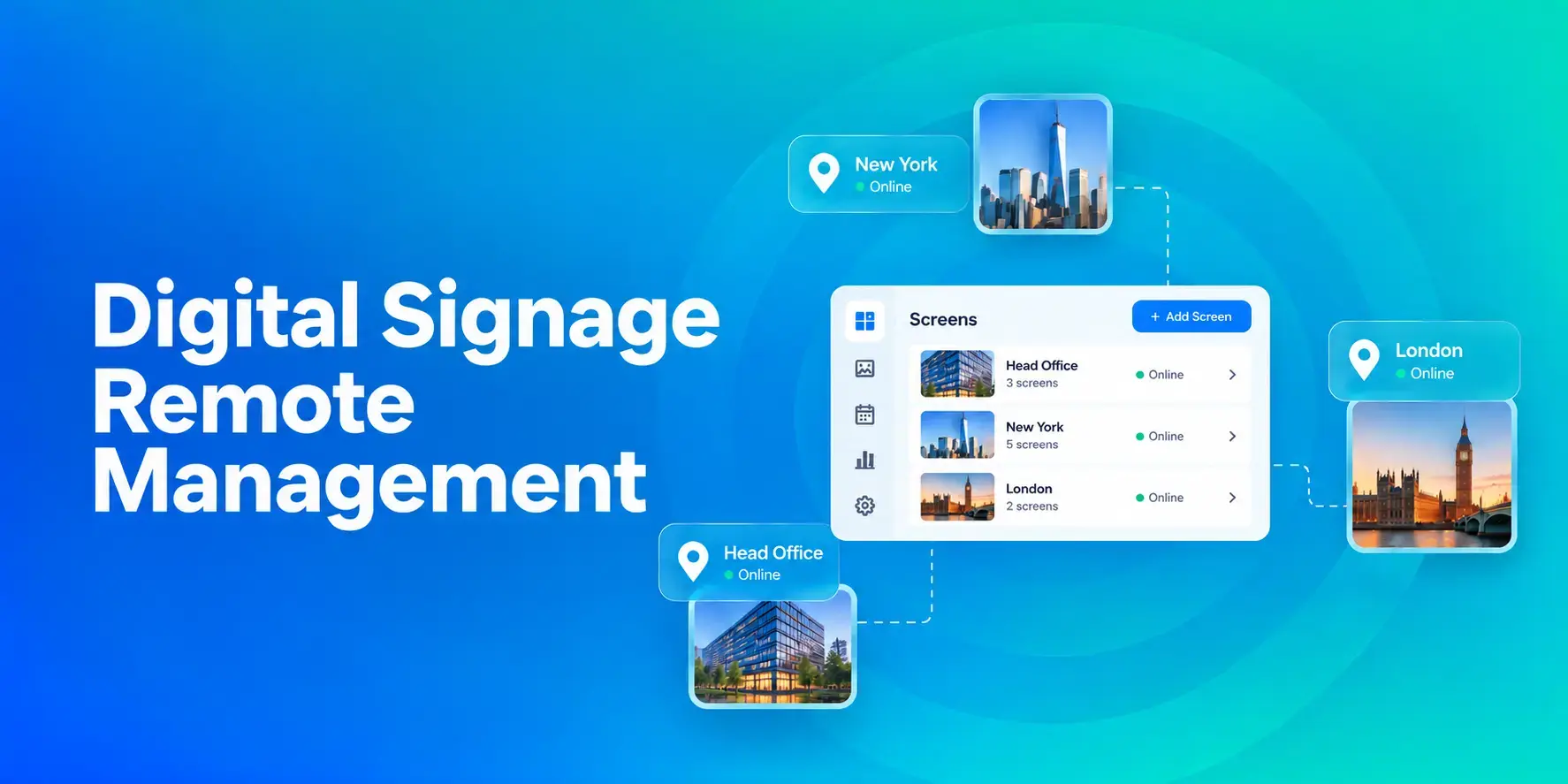
Digital Signage Remote Management: How to Run Every Screen From One Place
Digital signage remote management lets you control screens, schedules, and display health from an online platform. To get started, choose a hardware-agnostic platform, connect your media players or[…]
Read More
12,300+ Organizations Trust Rise Vision, You Can Too
































Schedule a Free Demo
You deserve the #1 all-in-one platform for digital signage, screen sharing, and emergency alerts.