
Advancing technologies and demands for modernization have been plaguing the financial services industry, pressuring brick-and-mortar banks to adopt digital solutions to improve operations, reduce costs, and enhance the customer experience.
In line with this, many retail banks have begun adopting financial services technology — and seeing its positive impact. According to Insider Intelligence, retail banking executives say that advancing in-branch banking technologies have helped them reduce costs (39%) and improve customer satisfaction (24%).
Among the ways banks are digitizing their services is through digital signage. Used as a tool to communicate information, market a service, or keep customers engaged, cloud-based digital signage software solutions are seeing important applications in bank settings.
How Digital Signage Helps in Retail Banking
There are several areas where digital signage is improving retail banking.
Attract New Customers
Digital signage, with its high-res dynamic displays, is effective at capturing attention. When placed in situated areas, it can attract pedestrians or drivers and effectively disseminate the message. Digital signs, then, are highly effective in introducing a bank’s services and boosting its customer base.
More engaging than static traditional signs, digital signage can show captivating animations, informative videos, and posters with bold graphics, making them hard to ignore.
Build Relationships with Customers
The retail banking industry is built on trust. Customers prioritize finding a safe place to keep their money and manage their investments, only working with banks that they have full trust and confidence in. Often, trust is earned through strong relationships with customers.
Digital signs can help banks build relationships and authentic connections. Simply displaying content that provides valuable helpful information or introducing staff members and bank accolades can go a long way in boosting their credibility and trustworthiness in the eyes of new and existing customers.
In fact, a study has revealed that digital signage content can shape purchase intentions and perceptions of product quality, especially when the content is matched with consumers’ moods and interests.
Enhance Branding
With plenty of banks competing in the financial services market, branding becomes a crucial endeavor to set themselves apart. Retail banks have been taking on traditional means to increase brand awareness and recognition, from giving away branded merchandise to printing out informative flyers and brochures.
Digital signs provide a cheaper and more effective approach to branding, allowing banks to display a range of branded content to introduce themselves and their offers to customers. They can deploy the same branded content on all screens across branches for consistent messaging, and even update content when needed on the fly.
Enhance Customer Experiences In-Bank

Let’s face it — brick-and-mortar banks don’t receive as much traffic as they used to. Customers have traded in long lines and manual processes in-bank for the convenience of online banking. But there are still financial services that are yet to be digitized, which still presents the need for customers to personally visit a retail bank every now and then.
Banks must then strive to provide customers with satisfactory service in-bank, particularly when it comes to queue management. Digital signs can be used for this purpose, displaying information about who’s up in the queue, expected wait times, the documents they will need at the counter, mobile banking alternatives, etc.
This can go a long way in keeping the line moving faster and even reduce the customer’s perceived wait time.
Improve Communication
In retail banking, there needs to be a good flow of information between the bank and the customer. Open, friendly communication helps the bank create strong relationships with their customers, which builds trust and confidence — the very human emotions around which the banking industry revolves.
Through digital signage, banks can improve the way they communicate and relay information to their customers, which further establishes their credibility in the field. They can also be used to improve internal correspondence with staff by deploying content on policy updates, process changes, or training information.
Reduce Marketing Expenses
For the longest time, banks have marketed their services through traditional signage like brochures, flyers, and posters. The cost of printing high volumes of these collaterals and reprinting them in case of changes and updates can add up over time.
While digital signs are more expensive than traditional printed marketing materials at first glance, they end up paying for themselves with the ROI they generate. They’re easy and cheap to maintain as well, with real-time content updates and changes possible with a click of a button.
Streamline Bank Operations
The financial services industry is constantly evolving, and the rapid change of pace can be difficult to keep track of — especially for banks that are relying on traditional pen and paper or manual processes.
Digital signs can keep up with the rapidly changing industry and customer demands. By deploying information in real-time, they deliver urgent information fast and keep everyone, from staff to customers, aligned and updated with new policy or process changes.
Upsell Services
From savings accounts and time deposits to personal loans and currency exchanges, banks have a lot of services that they want their customers to know about. Digital signs can help introduce less popular offers and entice customers to ask about them.
Banks can maximize this by displaying content during peak times of the day when plenty of customers are waiting in line. Digital signs with engaging content about the bank’s services will be a welcome message while they wait for their turn to approach the counter.
So it’s not too hard-sell, this type of content can be accompanied by widgets or other interesting displays like RSS news feeds about the financial service industry, social media feeds, informative videos, and more.
How to Use Digital Signage in Banks
 With all the benefits that digital signage can bring to the financial services industry, it’s high time for banks to begin adopting the technology and using it to reduce costs, improve operations, and enhance their customers’ experiences.
There are many ways that digital signs can be incorporated into a retail bank. Here are some ideas:
- Display queue information and wait times
- Provide updated currency exchange rates
- Introduce the bank’s services, promotions, and offers
- Educate viewers on the financial services industry, such as by providing saving and investing tips or defining banking terms
- Provide local weather and news updates about the financial services industry
- Introduce the bank’s employees or accolades
- Help with wayfinding by displaying maps or directories
- Encourage self-service with an interactive touch-screen kiosk
Improve Your Bank with Digital Signage
With customers now demanding faster and better services for their banking needs, retail banks need to step up their game and incorporate digital signage solutions. These dynamic displays are small investments that can reap a ton of benefits, from attracting and retaining customers and fostering customer trust and loyalty to reducing costs and streamlining operations — making your investment come back tenfold.
Ready to incorporate digital signage into your retail bank? Book a demo with Rise Vision, the number one free cloud-based digital signage software.
More From Our Blog
-
Yodeck vs ScreenCloud vs Rise Vision (2026 Comparison)
Yodeck is the cheapest way to run a few screens. ScreenCloud is the polished corporate pick. Rise Vision combines digital signage, screen sharing, and emergency alerts in one platform, and it's the[…]
Read More -

The Best Chrome Sign Builder Alternatives for Schools in 2026 (Free and Paid Options)
Google stopped supporting Chrome Sign Builder in kiosk mode after ChromeOS 150 in July 2026. So you'll need a replacement for any screen that's still running it. For schools that want to keep their[…]
Read More -
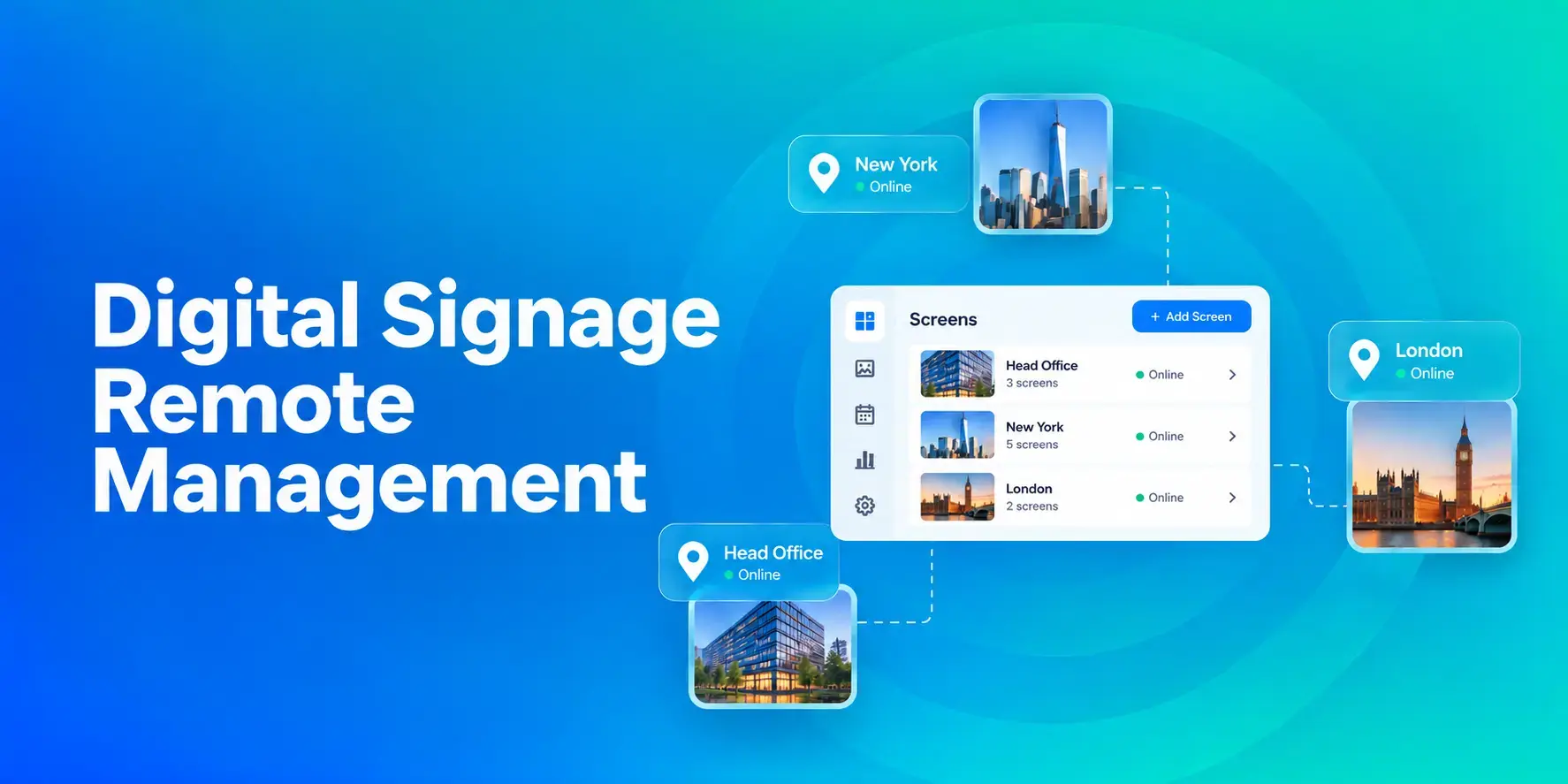
Digital Signage Remote Management: How to Run Every Screen From One Place
Digital signage remote management lets you control screens, schedules, and display health from an online platform. To get started, choose a hardware-agnostic platform, connect your media players or[…]
Read More
12,300+ Organizations Trust Rise Vision, You Can Too
































Schedule a Free Demo
You deserve the #1 all-in-one platform for digital signage, screen sharing, and emergency alerts.